Parking Lot Pooling Water After Every Rain? Why Drainage and Slope Failed
Quick Answer:
If your parking lot puddles after every rain, it almost always comes down to one of four things: the original grading never built in enough slope to move water off the surface, the base or subgrade underneath has settled and created a low spot, a catch basin is clogged or wasn't sized for how much water actually hits the lot, or "birdbaths" formed where uneven paving passes or old patches left dips in the surface. In eastern North Carolina's heavy-rain and hurricane-season climate, that standing water doesn't just sit there and evaporate — it works down into the base and starts breaking the pavement apart from underneath, with no freeze-thaw cycle required. Finding the actual cause, instead of just watching the puddle, is what keeps it from turning into a pothole and a liability problem.
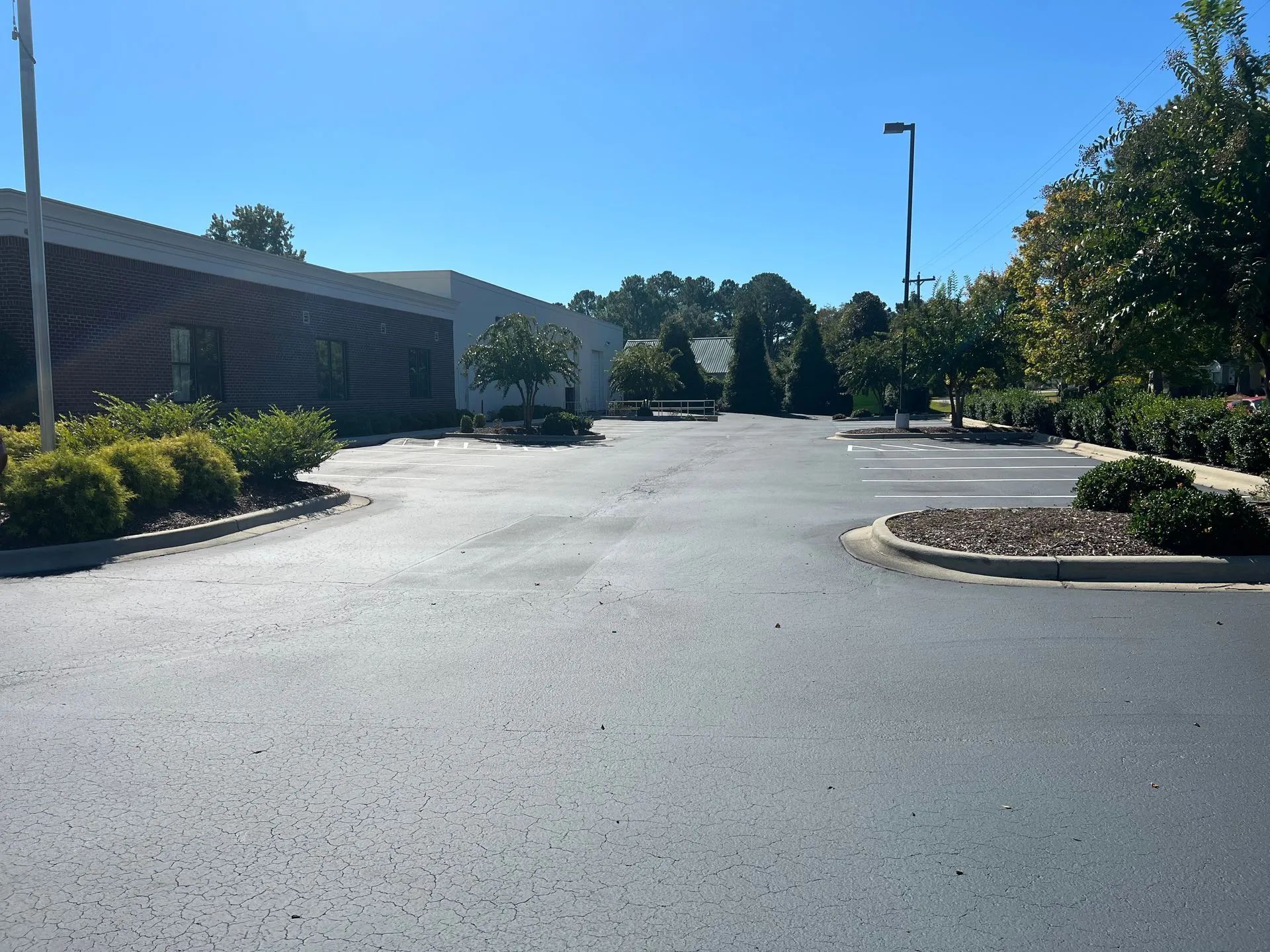
Every commercial lot in Jacksonville and the surrounding coastal counties takes on the same basic threat: a lot of rain, arriving fast, on ground that doesn't always drain the way it looks like it should. When a section of your parking lot holds water for hours (or days) after a storm, that's not cosmetic. It's a sign that somewhere between the original design and the ground you're standing on, the water lost its path off the pavement. Figuring out where that path broke down is the first step to actually fixing it instead of patching the same wet spot every few months.
Why the Original Slope Wasn't Enough
Asphalt doesn't drain because it's asphalt — it drains because someone graded the ground underneath it to move water in a specific direction. A parking lot surface generally needs somewhere around one to two percent slope, minimum, to push sheet flow toward a curb, swale, or inlet. That's a modest pitch — about an inch and a half of drop over every ten feet — but it has to be consistent across the whole surface, not just averaged out. A lot can look flat to the eye and still be within design tolerance, or it can look flat and actually have almost no fall at all.
When a lot was built without enough slope worked into the original grading plan, water has nowhere to go once it hits the pavement. It spreads out instead of running off, and the first heavy storm shows you exactly where the flat spots are. This is especially common on lots that were expanded or tied into an older section over the years, where the new pavement's grade doesn't quite match up with what was there before. The seam between old and new becomes the low point, and that's where the water collects every single time.
It's also common on lots where the design tried to drain in one direction across too wide a span. If a lot is two hundred feet across and only has a foot or two of usable elevation change to work with, that's not enough fall to keep the water moving the whole way to the edge. Somewhere in the middle, the flow slows down, and a slow-moving sheet of water becomes a puddle.
How the Ground Underneath Shifts After Construction
Grading is only half the story. What happens to the ground after construction matters just as much as how it was shaped at the start. New fill placed under a parking lot doesn't stay put — it settles as it consolidates under the weight of the pavement and the traffic rolling over it. That settlement isn't dramatic; it's usually a small percentage of the fill's original depth. But a small percentage over a large fill area adds up to a real dip in the surface, and it doesn't happen all at once. It shows up gradually, months or years after the lot was paved, which is why a lot that drained fine when it was new can develop a standing-water spot with no obvious cause.
Where the fill was uneven to begin with — deeper in one corner of the lot than another, because the original grade needed more material in that area — that section will also settle more than the rest. The result is a shallow bowl that wasn't part of the design at all. It formed on its own, after the fact, because the ground under it kept moving after the asphalt crew left.
Soil type plays into this too. Sandy soil, which is common across a lot of eastern North Carolina, drains fast, but it also tends to settle and shift under repeated wheel loading in a way that heavier clay soils don't. A subgrade that wasn't compacted to a uniform density before paving is exactly the kind of subgrade that keeps settling long after the job is finished.
Tip: If a low spot has shown up gradually over a year or two rather than appearing right after a storm, treat it as a settlement issue first, not a paving defect. Mark the spot, note how deep the water sits and how long it takes to clear after a normal rain, and track it over your next few storms. That pattern — steady worsening, consistent location, water that lingers longer each time — is the signature of a subgrade that's still consolidating, and it tells a paving crew exactly where to dig when they come out to fix it.
When the Water Has Nowhere to Drain
Even a well-graded lot depends on its catch basins and inlets to actually carry the water away once it reaches the low point. If those structures are clogged with leaves, sediment, or debris, or if they were never sized for the volume of water the lot generates in a heavy downpour, the water backs up at the inlet and spreads out across the surrounding pavement. From the surface, that can look identical to a slope problem — a wide puddle sitting in one area of the lot — but the actual failure point is underground, at the drain itself.
This shows up constantly after the kind of intense, fast-moving rain eastern North Carolina gets during summer thunderstorms and tropical systems. A drainage system that keeps up fine with a steady, moderate rain can get overwhelmed in minutes once several inches fall in a short window, especially if the inlets haven't been cleaned out in a while. Leaves and pine straw from nearby trees, sand washed off the pavement itself, and general debris all settle into the grate and the pipe below it, narrowing the opening a little more with every storm until the water simply can't get through fast enough.
Missing or undersized catch basins are a design problem rather than a maintenance one — the lot may never have had enough inlets to handle the water landing on it, particularly if the property has been paved over or expanded since the drainage system was originally laid out. Adding impervious surface without adding drainage capacity to match is one of the most common reasons a lot that used to drain fine starts holding water after a renovation or expansion.
What Standing Water Actually Does to Your Pavement
This is the part property owners tend to underestimate: standing water isn't just an eyesore or an inconvenience between storms. It's actively working against the structure of the pavement the entire time it sits there.
Asphalt itself sheds water reasonably well when it's intact, but the base and subgrade underneath it are a different story. Water that sits on the surface for hours has time to work down through hairline cracks, joints, and porous spots in the mat, and once it reaches the base layer, it starts to saturate material that was designed to stay relatively dry. A saturated base loses a meaningful amount of its load-bearing strength compared to the same base at proper moisture content — which means the pavement above it has less support than it was built to have, right at the exact spot where trucks and cars keep rolling over it.
In colder climates, this kind of saturation gets discussed mostly in the context of freeze-thaw cycles, where water in the base freezes, expands, and cracks the pavement from within. Eastern North Carolina doesn't get much of that. But the water damage happens anyway, freeze-thaw or not — repeated saturation and drying cycles alone are enough to weaken a base over time, especially in sandy soils that already drain and shift more than heavier clay. Add the region's summer heat, which softens asphalt binder and makes the surface more vulnerable to deformation under load right when it's also sitting in water, and you get a section of pavement that's being attacked from two directions at once.
Once the base has been weakened in one spot, that spot becomes the next low point — and the next puddle. It's a cycle that gets worse each time it rains, and it's the direct mechanical path from "there's a puddle in the corner of the lot" to "there's a pothole in the corner of the lot," usually within a season or two if nothing changes.
Pothole Formation Is the Predictable End Point
A pothole isn't really a separate problem from standing water — it's what standing water eventually does. Water works into the base through a crack or a seam, softens the material underneath, and then the weight of vehicle traffic does the rest, punching through the weakened top layer because it no longer has solid support below it. The pothole that shows up seems sudden, but the process that created it has usually been running for weeks or months, hidden under a puddle that looked like nothing more than a nuisance.
Getting a Lot That Actually Sheds Water
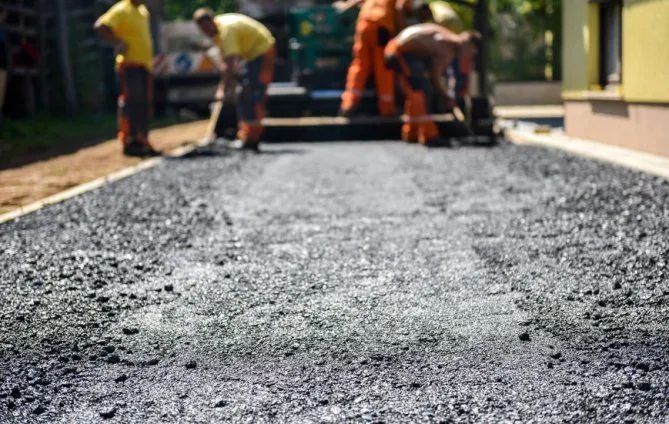
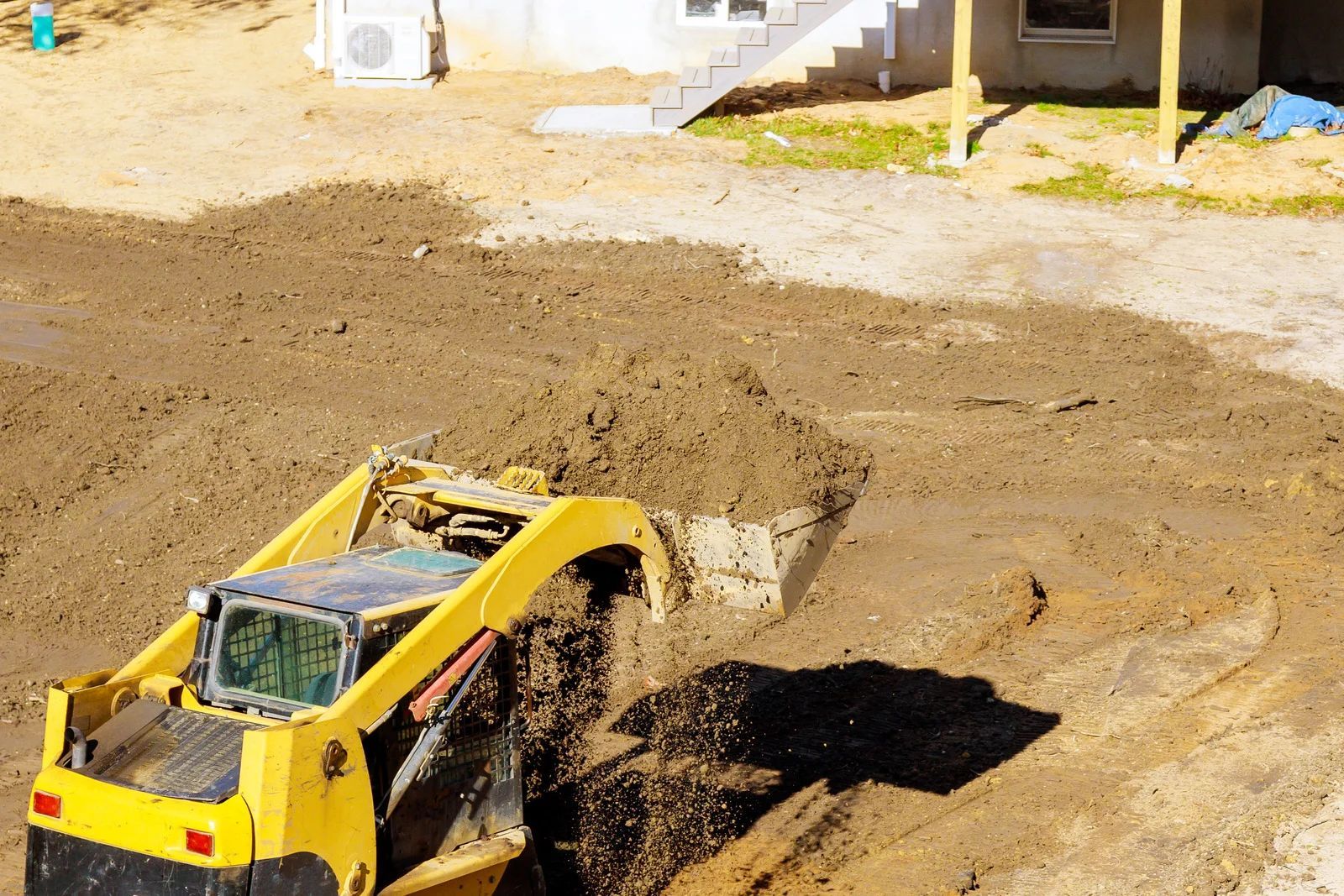
Correcting chronic standing water usually means addressing the real cause rather than the symptom. If the underlying issue is insufficient slope, the fix involves regrading — building the correct pitch back into the surface, either across the whole lot or in the affected section, so water has a clear, continuous path to a collection point. If the base has settled, that section typically needs to be excavated, recompacted, and rebuilt from the subgrade up, not just resurfaced, because a new layer of asphalt over a soft, uneven base will settle again in the same place. If the problem is a clogged or undersized catch basin, sometimes routine cleaning solves it; other times the drainage system just needs a larger inlet or an additional one to handle the volume the lot generates in eastern North Carolina's heavier storms.
The starting point for all of it is the same: get eyes on the actual low spot, ideally during or right after a rain, so you can see exactly how the water is moving (or not moving) across the surface. That tells a paving crew whether they're dealing with a grading problem, a settlement problem, a drainage-structure problem, or some combination of the three — and building the right fix depends entirely on getting that diagnosis right the first time.
Frequently Asked Questions
How much slope does a parking lot actually need to drain properly?
Most parking lots need about one to two percent slope to move water toward a curb, swale, or drain. Consistent grading prevents flat areas from collecting water after heavy rainfall.
Why does a parking lot that used to drain fine suddenly start holding water?
Subgrade settlement and drainage problems are common causes. Fill can gradually consolidate under traffic, while clogged or undersized drains may struggle after renovations, expansions, or heavier rainfall over time.
Is a small puddle after a rainstorm actually worth worrying about?
A puddle that disappears quickly may not indicate serious damage. However, water that remains for hours or repeatedly collects in the same location suggests an underlying drainage or grading problem.
Can birdbaths from old patch repairs be fixed without repaving the whole lot?
Yes, many localized birdbaths can be repaired without repaving the entire lot. The affected area can be removed, rebuilt, compacted properly, and graded to match the surrounding pavement surface.
Does eastern North Carolina's climate make drainage problems worse than they'd be elsewhere?
Yes, frequent heavy rainfall, tropical storms, sandy soils, and intense summer heat can accelerate pavement deterioration. Repeated water exposure weakens underlying materials and can cause low spots to develop into potholes faster.
Stop Standing Water Before Pavement Fails
Standing water is rarely an isolated surface issue. Whether the cause is inadequate slope, settling beneath the pavement, clogged drainage, or a localized birdbath, repeated puddling allows moisture to weaken the pavement structure and accelerate cracking, rutting, and pothole formation. Addressing the source early helps preserve the lot's drainage performance and prevents a small low spot from becoming a larger pavement failure.
For commercial properties in Jacksonville, NC, understanding how coastal rainfall, sandy soils, and heavy storm events affect pavement drainage makes early diagnosis especially important. Able Asphalt Paving Inc.
brings 15
years of experience working with
parking lot conditions
in Jacksonville and the surrounding area, with an emphasis on identifying why water is collecting rather than treating only the visible damage.